
The Week in Short
The third week of 2026 was an action-packed one. Despite geopolitical tensions, softer-than-expected inflation numbers, weaker bank earnings, and mounting concerns about the Federal Reserve’s independence, markets managed to hold their ground and ended the week relatively unchanged, just below all-time highs.
Geopolitical Tensions
This week showed no lack of geopolitical news. The United States’ military occupation of Venezuela, along with President Trump’s keen interest in Greenland, sparked tensions and headlines across the US and Europe. These developments brought into question the fragility of NATO alignment, alongside a new onslaught of tariff threats from the US president aimed at countries opposing his actions in both Venezuela and Greenland.
Fed Independence
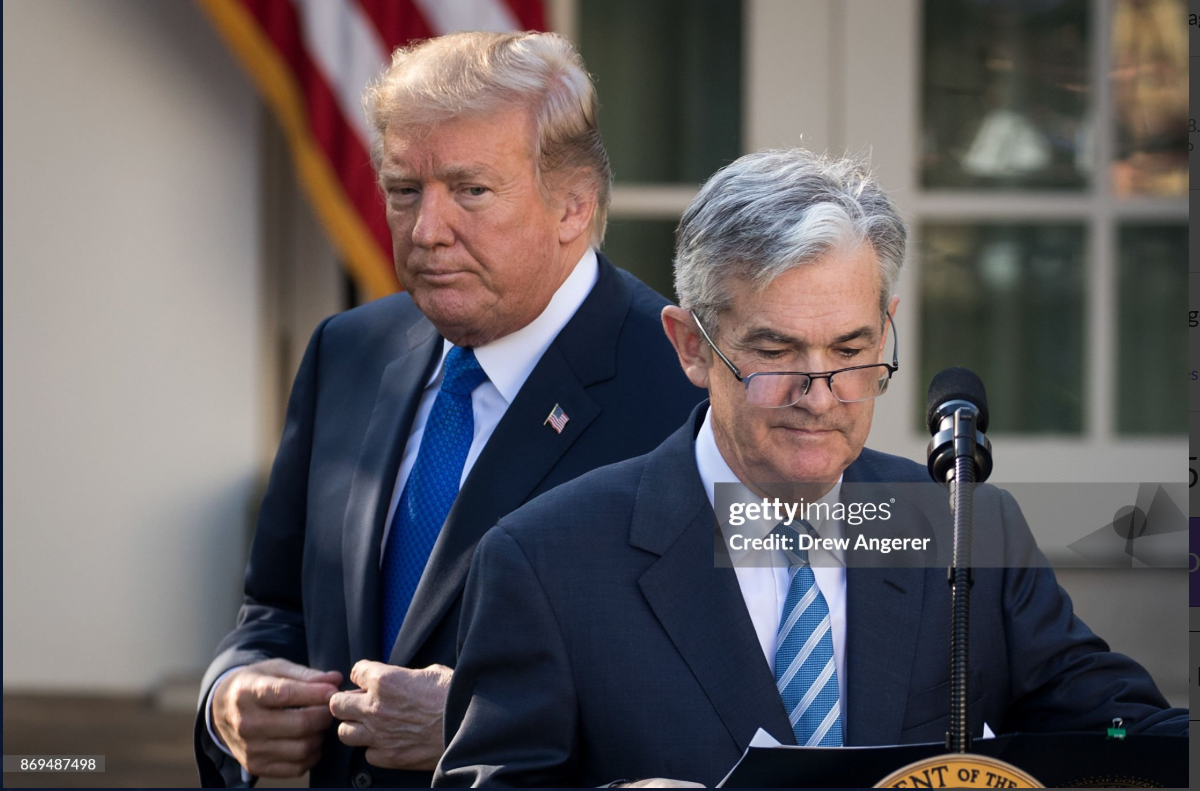
Perhaps one of the main headlines of the week, Fed Chair Jerome Powell announced early on that he was being subjected to a criminal probe by the DOJ under the “for cause” justification of cost overruns related to recent renovations of historic Fed buildings. However, Chair Powell made his position clear in a video address, stating that he viewed this as direct political pressure from the Trump administration to push for lower interest rates. Trump and Powell’s mutual dislike has been no secret, yet this move still came as a shock to many. Central bankers from across the world joined together to condemn the action and offer their support to Jerome Powell, who reiterated his commitment to the Fed’s dual mandate and institutional independence, a principle that now appears increasingly under threat.
Economic Data
The early part of the week delivered mixed economic data. US CPI came in at 2.6%, 0.1% below year-on-year expectations, while PPI printed in line with expectations at 2.7% YoY. These figures modestly increased expectations for a potential rate cut later this year.
Equity Markets
Equity markets were mostly flat over the week. US indices declined slightly, with the S&P 500 down 0.4%, the Nasdaq down 0.7%, and the Dow Jones giving up 0.3%. Across the Atlantic, markets took a more positive tone, with the EURO STOXX 50 up 0.57% and the FTSE 100 finishing the week 1% higher.
Chinese markets declined by 0.5%, while Japan continued its recent bull run, rising 3.8% on the week. Gains were supported by Prime Minister Sanae Takaichi’s plans to bolster domestic manufacturing and a reassessment of the financial sector amid rising interest rates.
Despite the decline, US markets held up relatively well given the geopolitical stress created by renewed tariff threats and heightened tensions surrounding Venezuela and Greenland. Softer inflation data provided some support, with CPI undershooting expectations and investors increasingly considering the possibility of rate cuts amid mounting pressure on Fed Chair Jerome Powell.
Among the weaker sectors, financials declined 2.3% as several major banks, including Goldman Sachs and JPMorgan, reported earnings. JPMorgan shares fell 2.6% on the week following weaker-than-expected investment banking revenues, alongside a heated public exchange between CEO Jamie Dimon and President Trump over Fed independence, Trump’s proposed 10% cap on credit-card interest rates, and threats by the president to pursue legal action related to post-2020 de-banking decisions.
Overall, global markets appeared relatively resilient despite escalating global and regional tensions.
Commodities
Commodities were among the most volatile asset classes this week. Prices moved sharply in both directions amid geopolitical developments, with silver outperforming, rising 11% on the week. Gold and crude oil posted more modest gains of 2.2% and 0.5% respectively, while natural gas continued its recent decline, falling 2.1% due to weather conditions and LNG export disruptions.
Bond Yields and FX
US bond yields edged slightly higher over the week, while EUR/USD fell 0.34% as markets continued to gradually price in a softer inflation outlook.
Cryptocurrency
Cryptocurrencies continued their recovery, with Bitcoin rising 5% to $95,300 and Ethereum gaining 6.6% as broader risk sentiment improved.
Interpretation
Despite a whirlwind of headlines, markets remained surprisingly resilient, likely supported by encouraging inflation data earlier in the week. This may suggest that investors are becoming more reluctant to react sharply to political volatility, increasing market resilience in the short term, though potentially leaving markets more exposed to a larger shock should tensions escalate further.
Looking to the Week Ahead
The coming week is holiday-shortened, with US markets closed on Monday for Martin Luther King Jr. Day. The World Economic Forum begins in Davos, with high-profile participants including Jamie Dimon, Jensen Huang, and David Solomon, alongside an expected appearance by President Trump, likely keeping geopolitical and policy tensions elevated.
On the earnings front, Netflix, 3M, and United Airlines report on Tuesday, followed by Johnson & Johnson on Wednesday, and Intel, GE Aerospace, and Procter & Gamble on Thursday. In terms of economic data, the UK releases unemployment figures on Tuesday and inflation data on Wednesday, while the US reports GDP, personal spending, and PCE data on Thursday, followed by S&P Global data on Friday.
Watch Points
Heading into the week, investors will monitor geopolitical developments and commentary from policymakers and executives at the WEF. Corporate earnings will offer insight into underlying economic momentum, while markets also look ahead to the Federal Reserve press conference scheduled for the following week.
Leave a Reply